GNI Annual Report 2025

The Global Network Initiative’s (GNI) 2025 Annual Report: Finding Resilience through Multistakeholderism reflects on a pivotal year of growth, adaptation, and collective action amid profound geopolitical and technological change. The report highlights the evolution of GNI’s accountability framework, expanded learning and engagement activities, and policy advocacy to protect and advance human rights online.

Explore the full report.

Looking for a specific section? Click to read the different sections:

Membership | Accountability (Public Assessment Report and Company Case Studies) | Policy | Learning | Stakeholder Engagement | Governance | Development | Financials

For a quick overview of GNI’s work in 2025, scroll down to explore the executive summary of each section.


A Note from the GNI Board Chair

Former British diplomat, and business and human rights expert Vicky Bowman serves as the Global Network Initiative's Independent Chair. She assumed her position on June 24, 2024. Bowman began her career as a diplomat, serving in several roles in the UK Foreign & Commonwealth Office, including in the European Union and as the UK Ambassador to Myanmar. She established the Myanmar Centre for Responsible Business (MCRB) in 2013, an initiative to encourage responsible business activities, and was based in Myanmar until being forced to leave in November 2022.

Read Bowman's reflections on GNI's 2025

Interview with GNI’s Vice Chair Usama Khilji

In conversation with GNI Vice Chair Usama Khilji, we trace his journey into digital rights advocacy—from experiencing internet censorship firsthand to becoming a leading voice for human rights in technology. Usama reflects on how the digital rights landscape has evolved, GNI’s efforts to become more globally representative, and the importance of bringing diverse perspectives together across the sector.

Looking ahead, he discusses the challenges posed by the growing power of technology and governments, while finding hope in communities and young people around the world who continue to challenge structures that undermine rights.

Membership

GNI’s network grew to 125 members in 2025, spanning every populated continent and bringing together companies, civil society organizations, academic institutions and experts, and investors.
We welcomed 19 new members across our four constituencies, including seven based in or focused on the Global Majority, further strengthening the diversity of perspectives, expertise, and lived experiences that shape GNI’s work. The year also marked GNI’s first Annual Meeting of Members and Q4 Board meeting in Latin America, hosted alongside our academic member CELE’s annual workshop on internet regulation—an important milestone in building a more globally representative and connected network.

Together, this growing and diverse membership anchors GNI’s work in a broad range of regional realities, political contexts, and experiences.

Accountability

GNI maintains a detailed, multistakeholder-designed framework aimed at advancing freedom of expression and privacy across the tech sector. Central to this effort is GNI’s independent assessment process, which is now in its fifth cycle.

GNI’s assessment process involves accredited, independent, third-party assessor review of corporate policies, systems, and decision-making frameworks, accompanied by case studies demonstrating real-life implementation. Findings are compiled into confidential reports which are reviewed by the GNI Accountability Committee and the GNI Board to determine whether member companies are implementing the GNI Principles (and their accompanying Implementation Guidelines) in good faith with improvement over time. Companies are also provided with recommendations to better implement the GNI Principles. Technical details of the assessment process are set out in the fifth cycle Assessment Toolkit

GNI’s 2025 Policy Impact

  • Mobilized targeted legal and human rights submissions across 8 countries (Bangladesh, Mexico, Pakistan, Russia, Sri Lanka, Taiwan, the UK, and Zambia) to block non-transparent content regulation, biometric tracking, and anti-encryption measures.
  • Challenged nationwide connectivity blockades and platform blocks in Tanzania, Nepal, Iran, and Gaza, directly advocating for the digital rights and connectivity of millions during critical political and human rights crises.
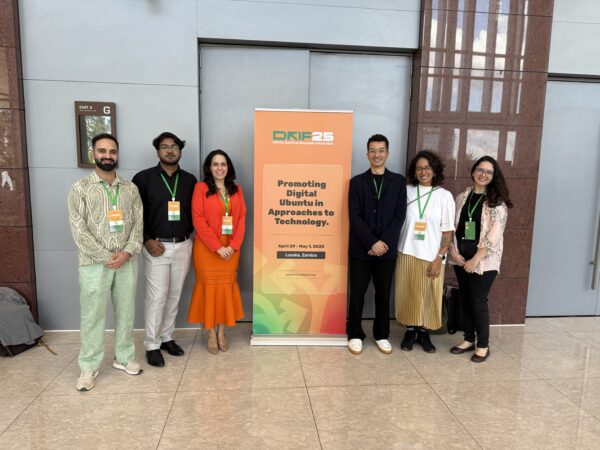
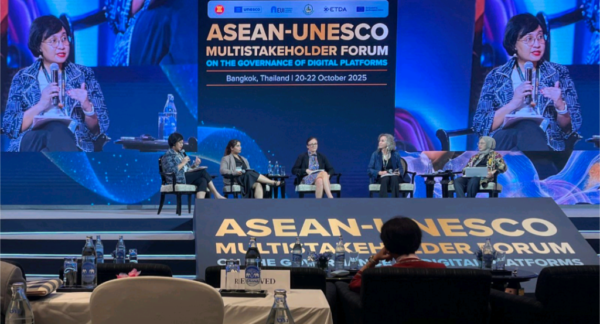
  • Shaped regional and global policy standards at the UN (Cybercrime Treaty & WSIS+20), ASEAN (Platform Governance Guidelines), the EU (CSRD standards), and the US (State Department international tech engagement) to preserve an open, interoperable Internet.
  • Advocated against state-mandated blockades of secure messaging apps (Signal and WhatsApp), defending the private, encrypted communications of millions of users against enforced migration to unencrypted state channels

Learning

Shared learning is a defining pillar of GNI’s multistakeholder model, bringing civil society, academia, investors, and technology companies together to exchange knowledge and tackle complex digital rights challenges. In 2025, GNI delivered more learning programming than ever before, exploring issues including AI governance, human rights due diligence, content moderation, network disruptions, surveillance, and researcher access to platform data.

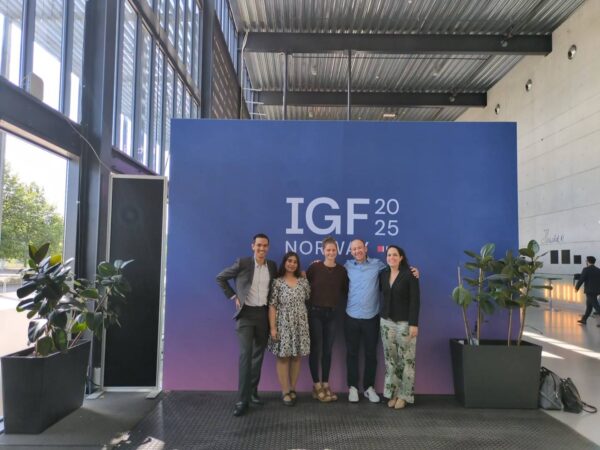
These conversations also translated into practical outputs, including reports and policy briefs, while GNI carried its learning into international forums through workshops and sessions at RightsCon, WSIS+20, the IGF, and other global convenings.
The year culminated in GNI’s first Annual Learning Forum in Latin America, bringing together experts in Buenos Aires to examine how governments, companies, and civil society can respond to rapidly evolving technology and human rights challenges.

Stakeholder Engagement

GNI continued to bring companies, civil society, and academic experts together in 2025 to deepen understanding of human rights risks and strengthen rights-respecting approaches to technology governance. Through its multistakeholder model and global network, GNI facilitated dialogue on human rights-based risk assessment, mitigation, transparency, accountability, and meaningful stakeholder participation as part of human rights due diligence.

A key highlight was the European Rights & Risks: Stakeholder Engagement Forum in Brussels, convened with the Digital Trust & Safety Partnership, which brought together more than 75 participants to explore the evolving regulatory landscape and practical approaches to stakeholder engagement.

Copyright Global Network Initiative
Website by Eyes Down Digital